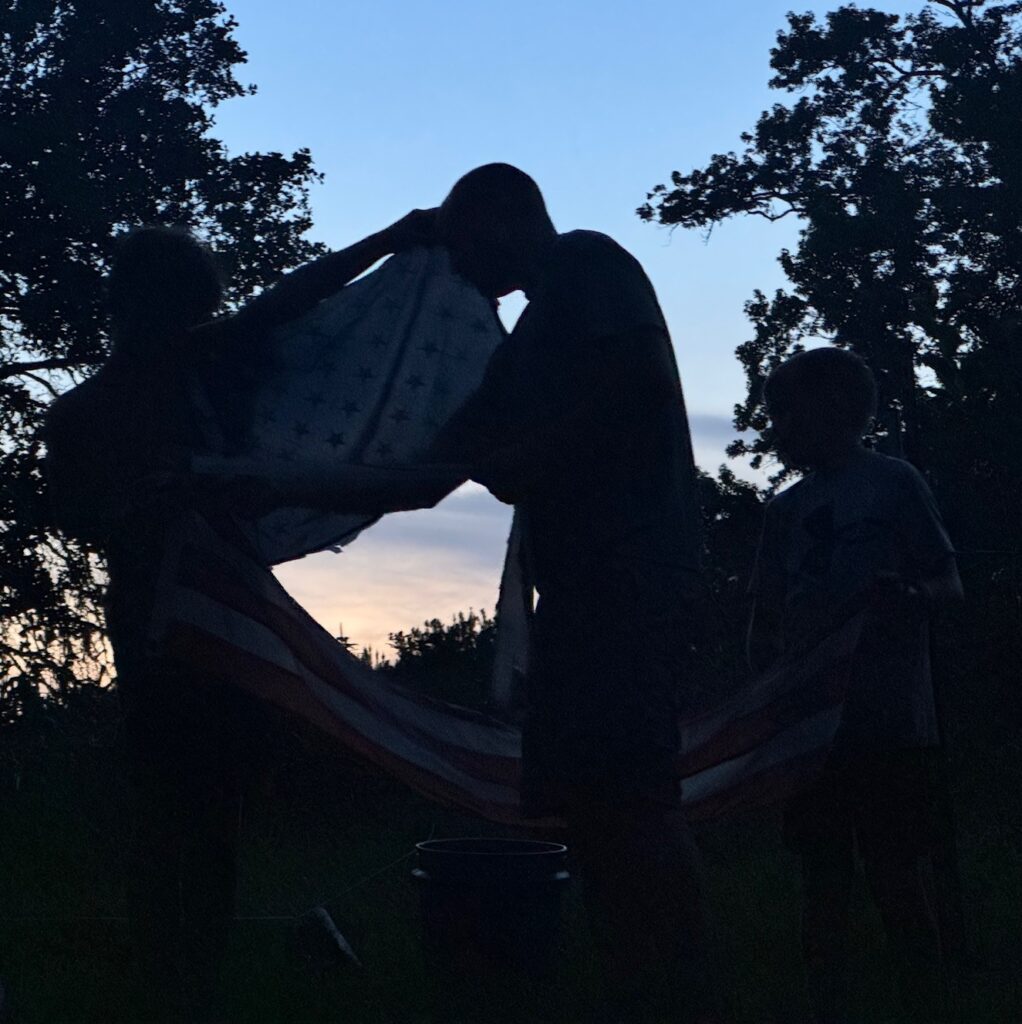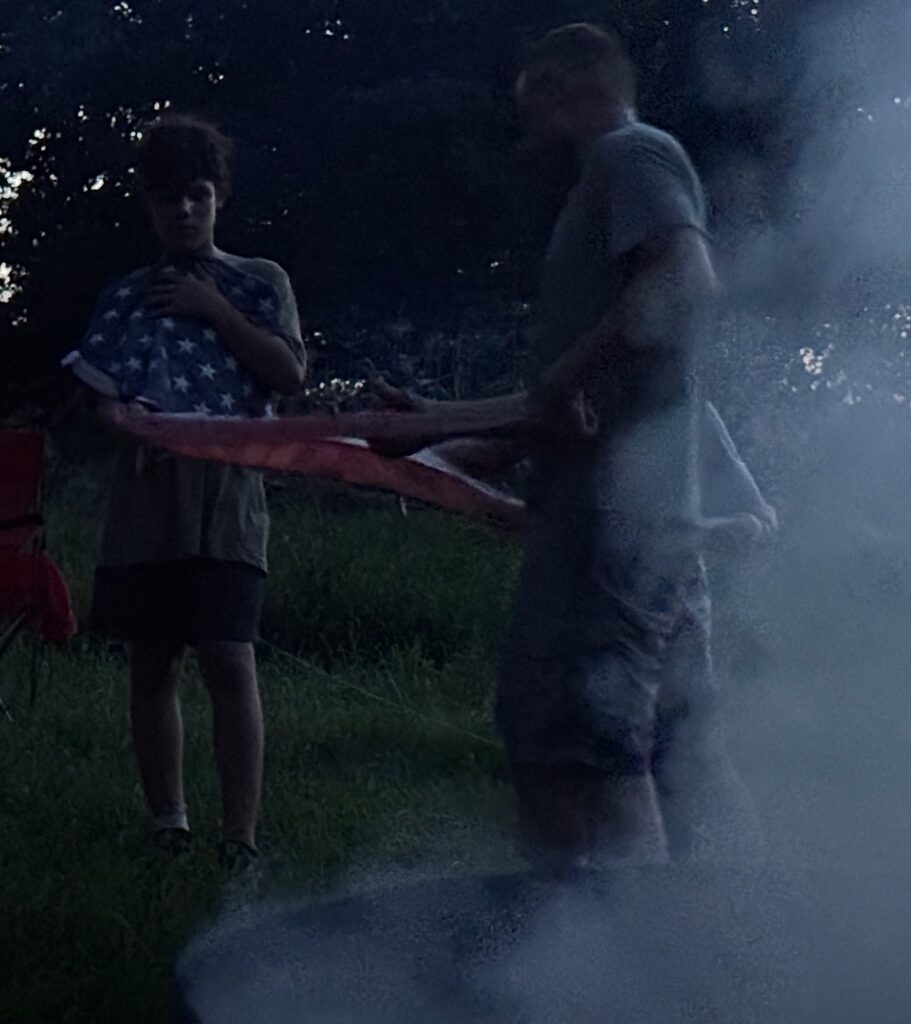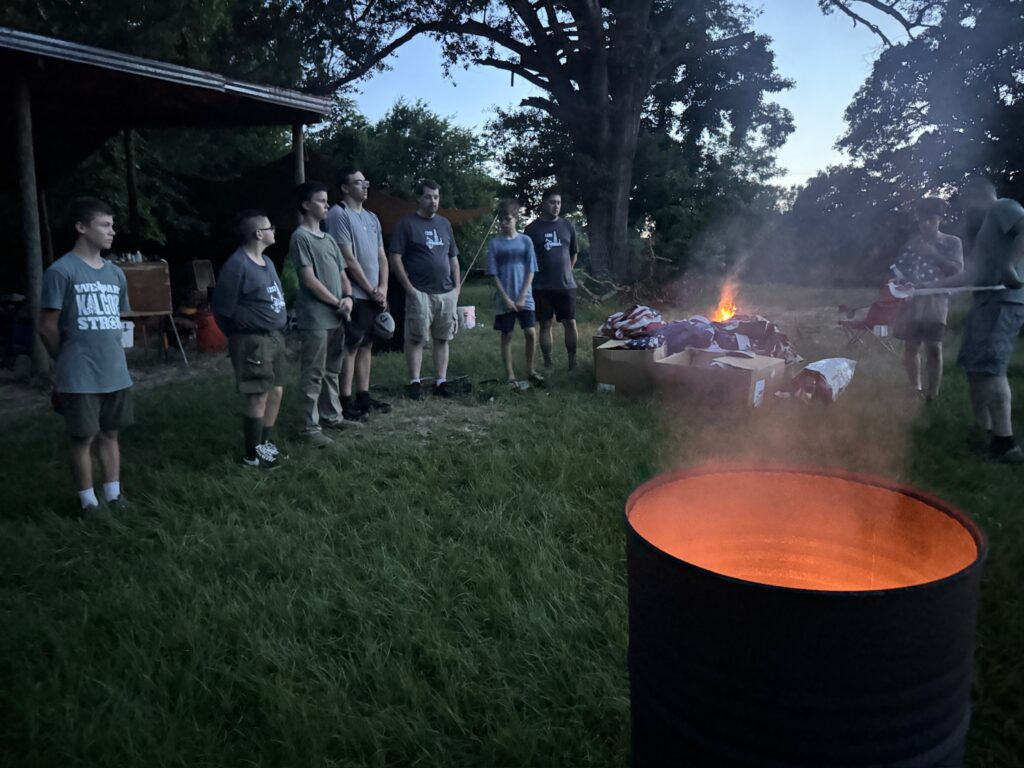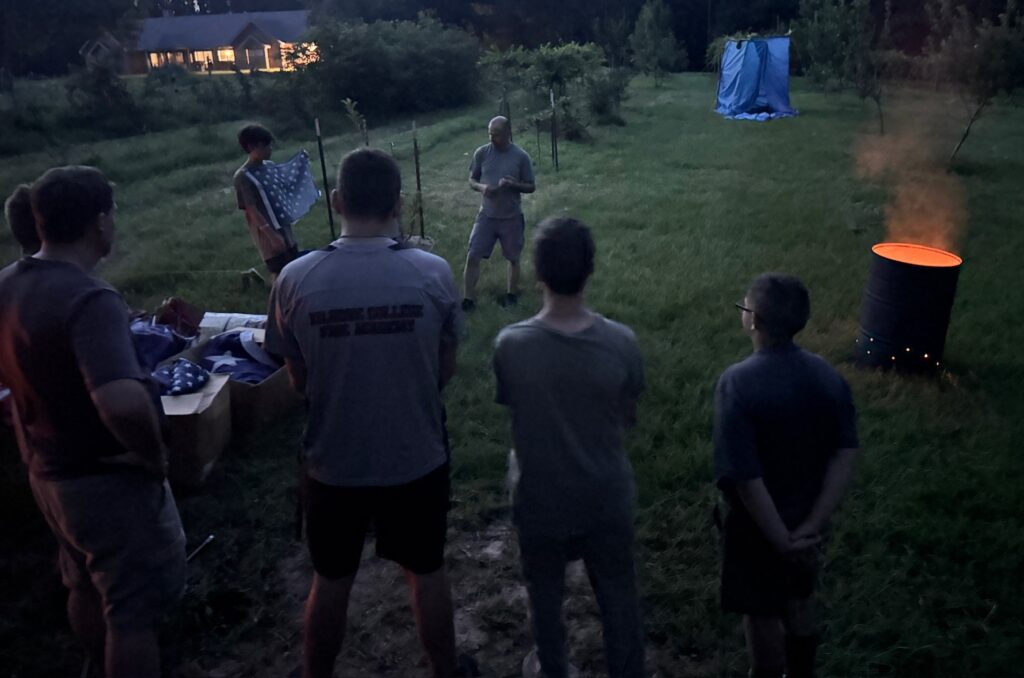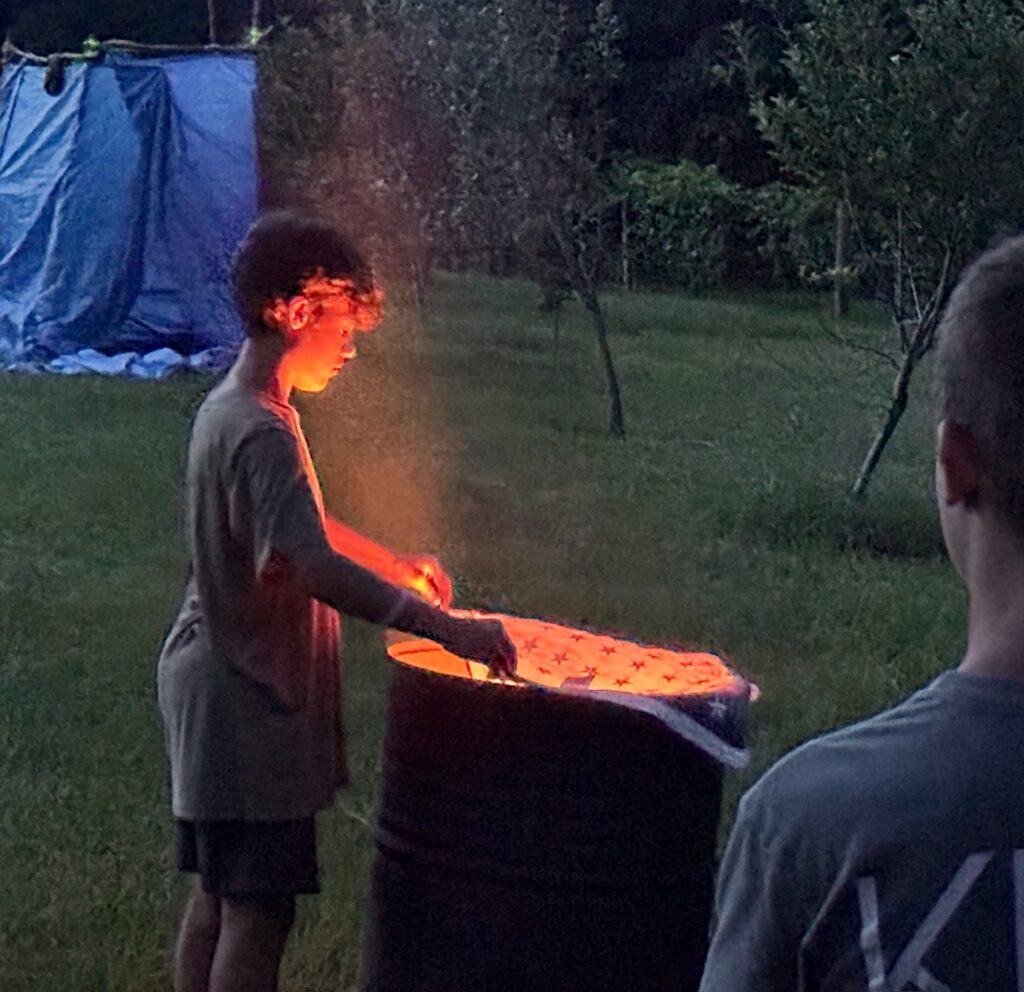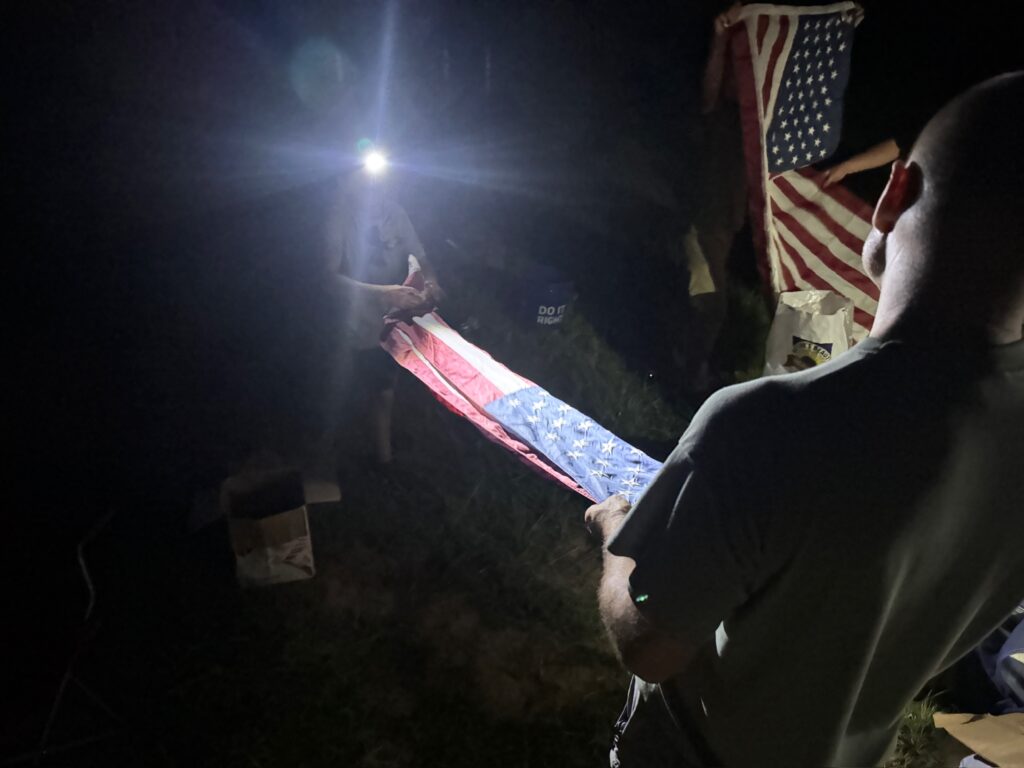
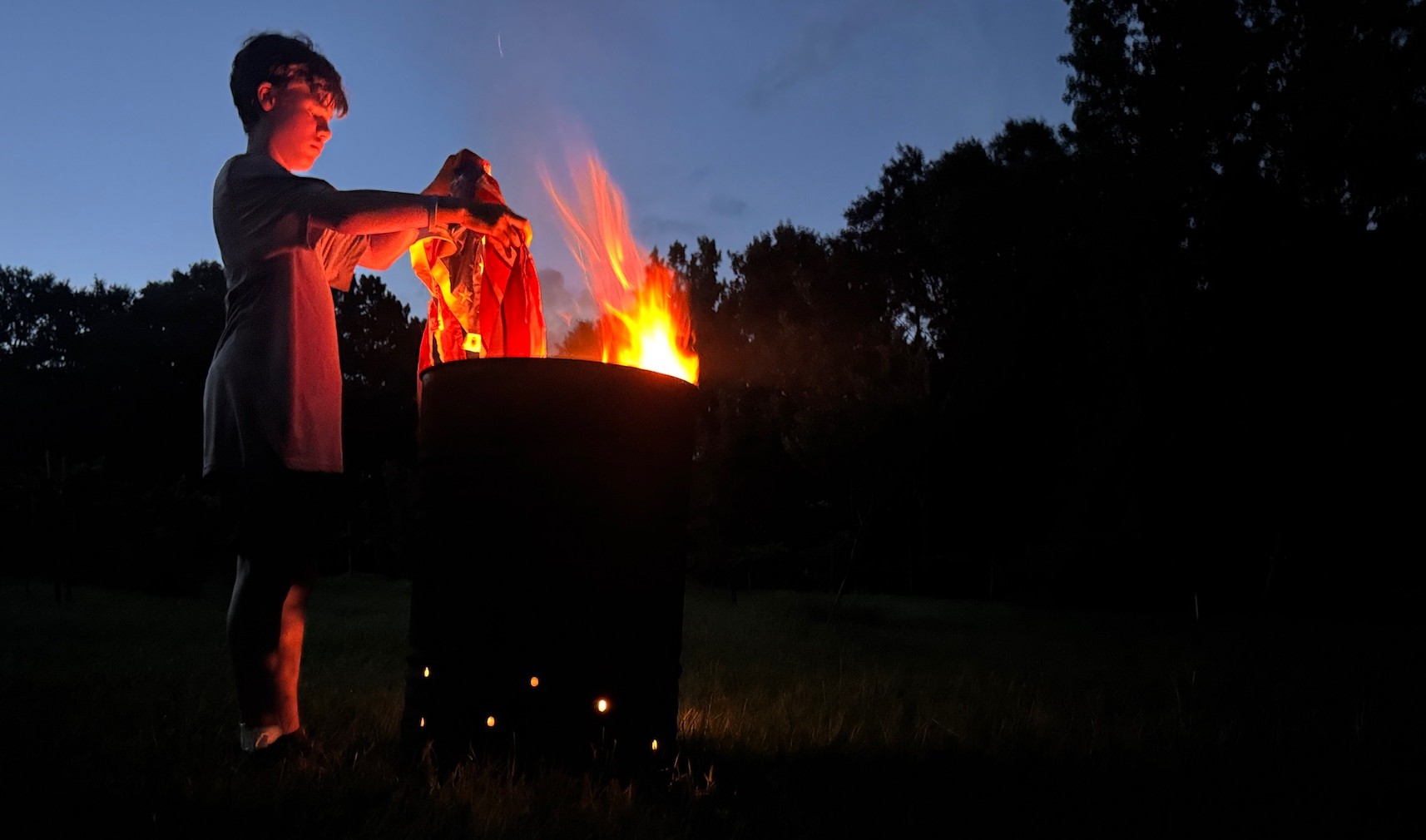
Before a U.S. flag is respectfully consigned to the flames, it’s painstakingly prepared.
It’s an ongoing task around here: Rotary Club of Kilgore’s year-round flag program sees hundreds of shining examples of Old Glory raised for every patriotic holiday, and on each outing, the weather takes its toll. Local Rotarians regularly entrust the frayed stars and stripes to the young members of Kilgore Scout Troop 252.
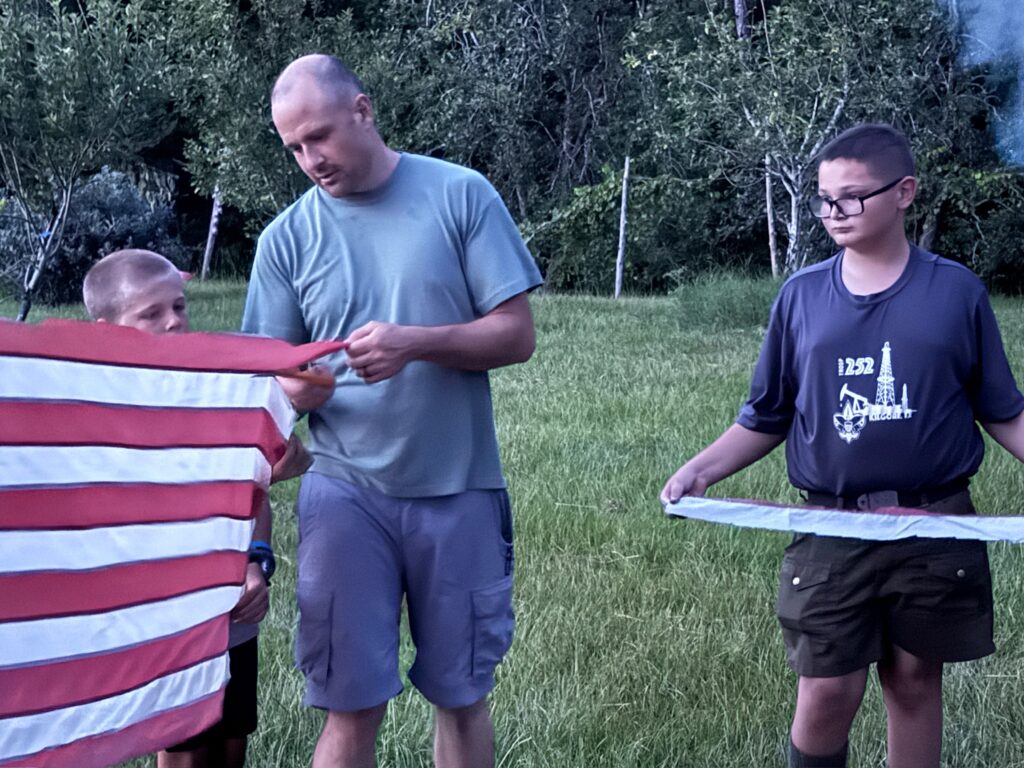
Mitchell Hancock is Scoutmaster for the group. Owner of Kilgore Lawn & Landscape, he’s also a Kilgore Rotary Club member, part of Rotary International’s District 5830.
[Courtesy photos by Sawyer Sullens, Kilgore Scout Troop 252]
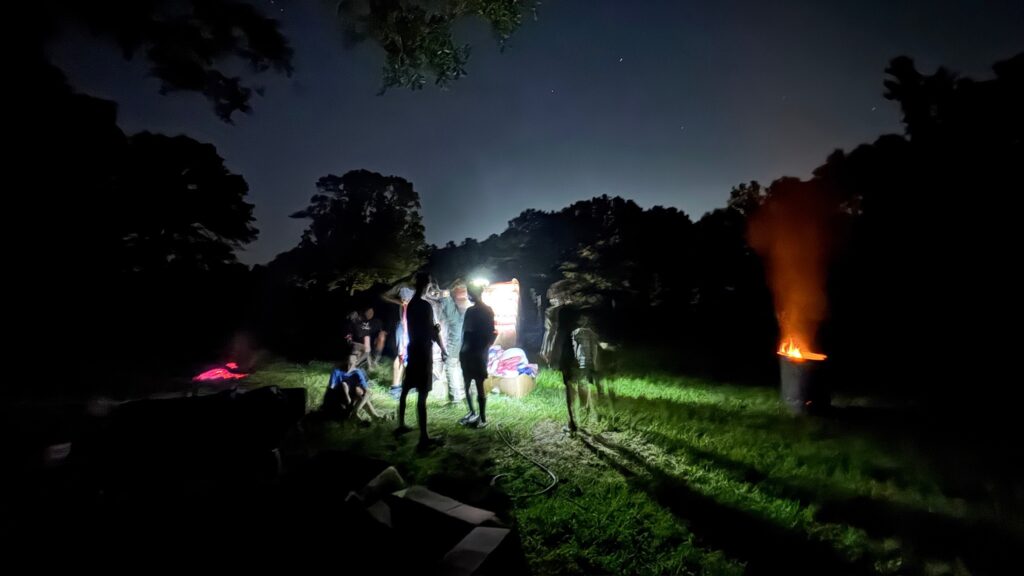
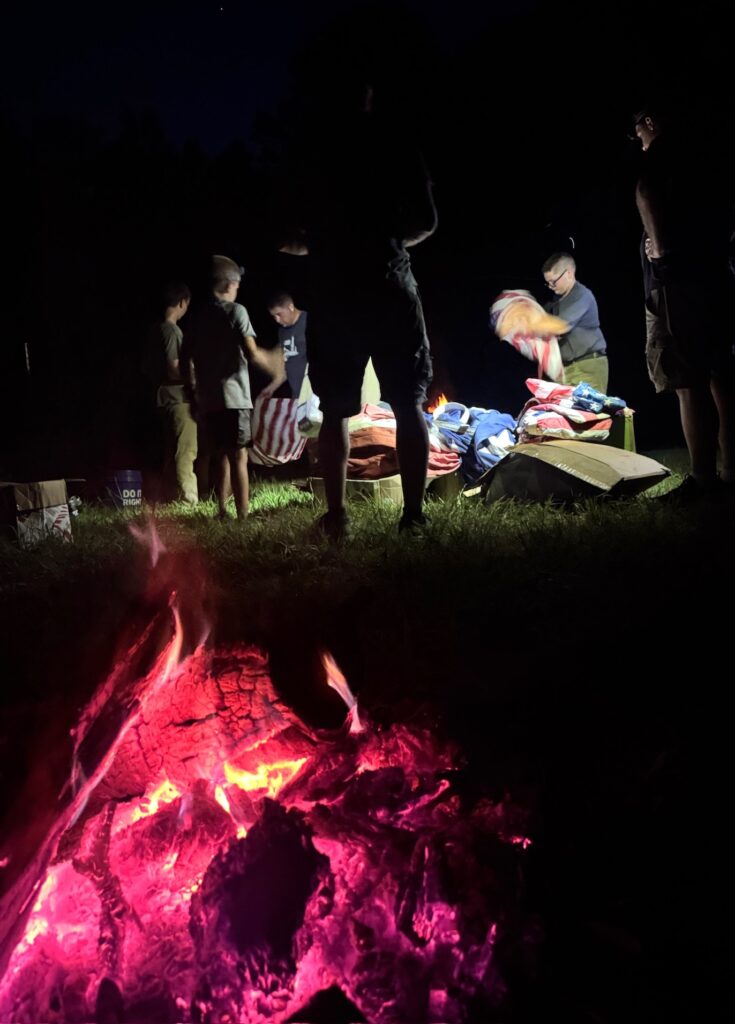
Troop members recently retired about 200 flags on June 11. The ceremony fell just before Flag Day (June 14) and the long stretch to Independence Day (July 4), when Rotary’s flags stay out for several weeks instead of the usual few days.
The bulk of the flags came from the civic organization, Hancock said, but there were others in the mix, too, requests from area businesses, organizations and individuals who want to ensure their flags are treated with care.
“We had a few of the gigantic ones,” Hancock added, such as one recently retired by East Texas Professional Credit Union. “They always fly a big one.”
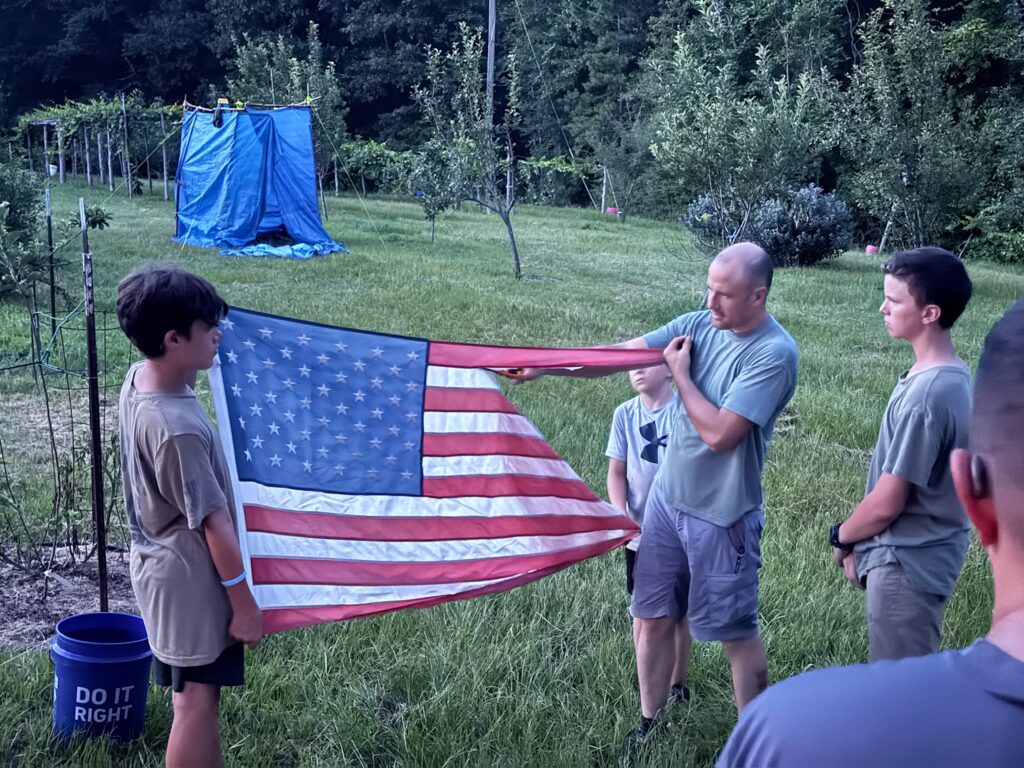
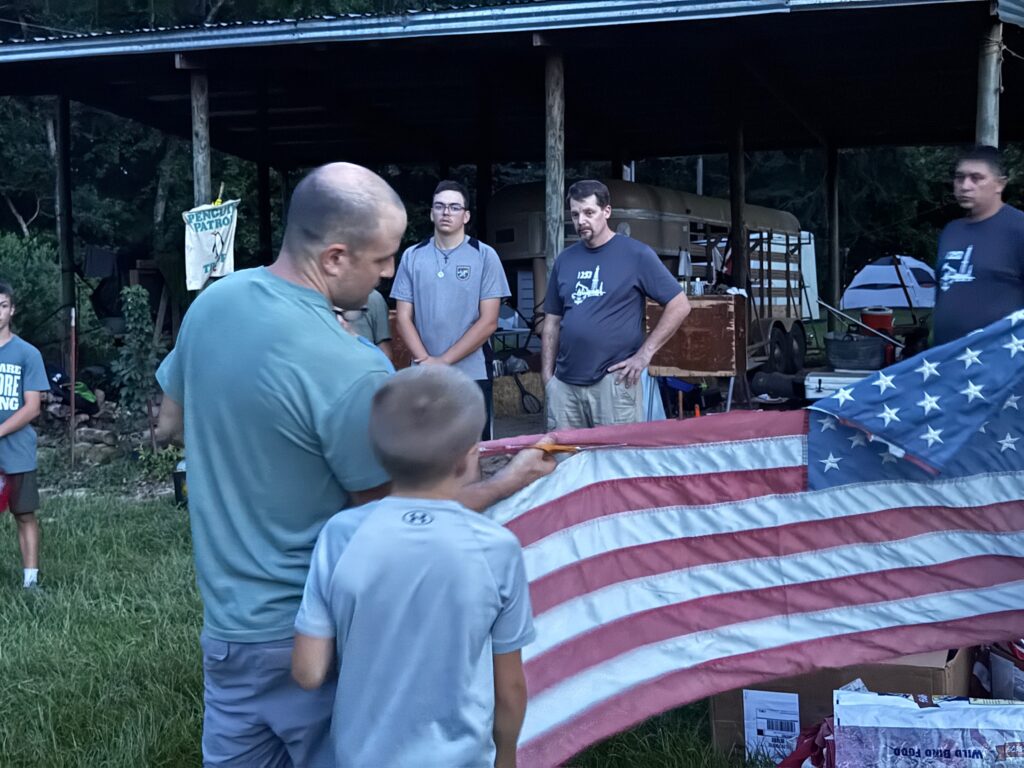
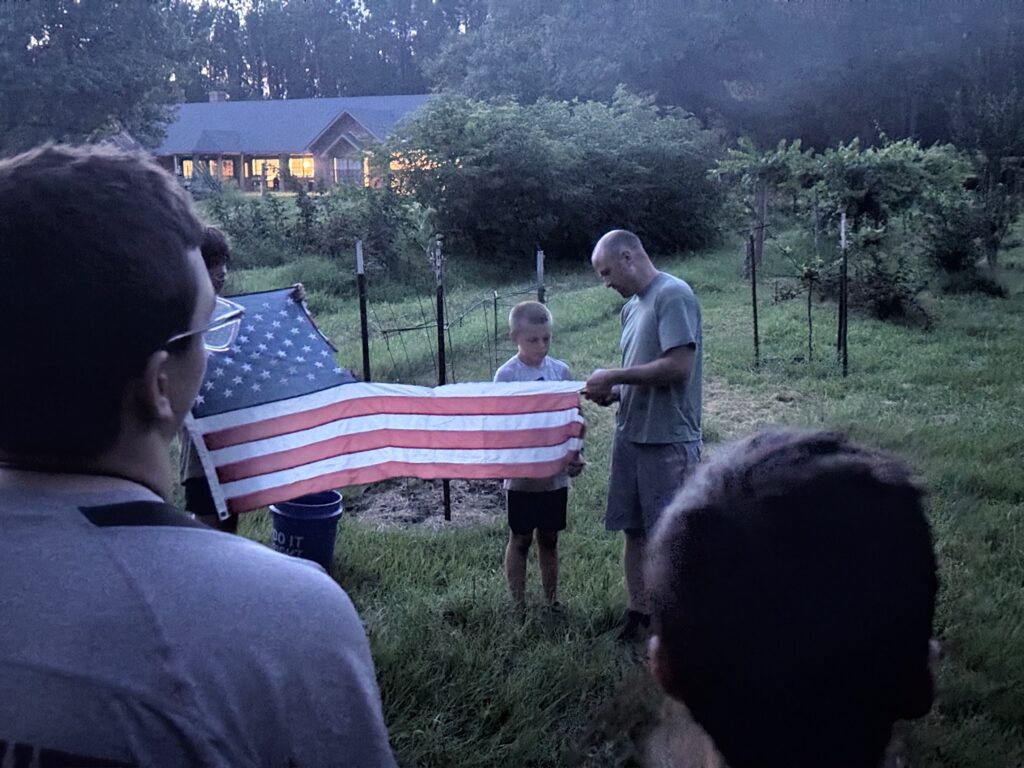
Regardless of size, the Scouts prepare each flag by cutting its 13 red and white stripes into individual strips.
“When it’s being retired, it’s not technically a flag anymore. It’s turned back into cloth.”
Kilgore’s Scouts make an extra effort to bring solemnity and purpose to the effort.
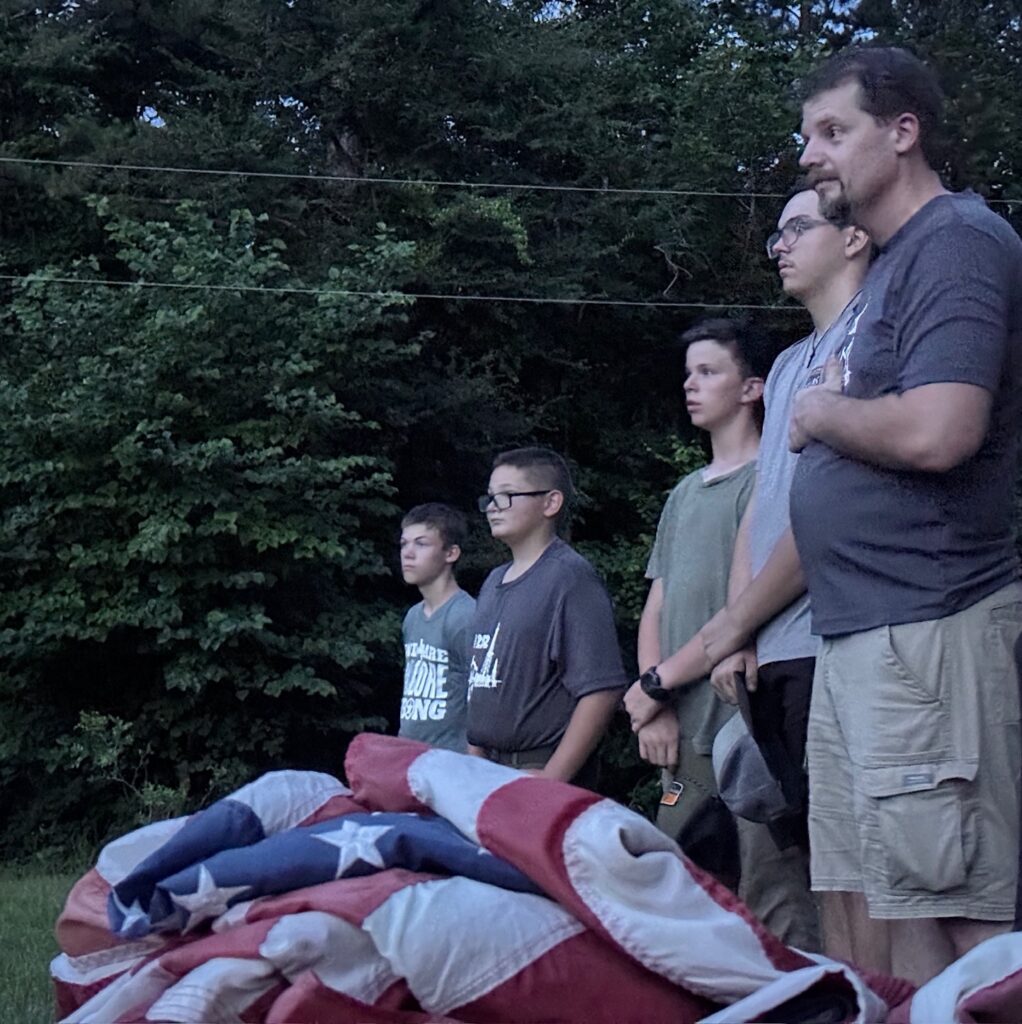
“Something that’s not flag protocol but that we do for the ceremony, we pray for a different military branch or position of government, different branches of government, while we do each stripe.”
Those pieces of cloth are each fed into the fire, but the blue field and its stars are burned as one.
“We never cut up the star field,” Hancock emphasized: “It’s symbolic that the nation will never be divided again as it was during the Civil War.”
Nine Scouts and four Scoutmasters participated in last month’s ceremony, carefully working their way through the flags in one night.
“We saved the big ones for the end,” Hancock added. “The last one I threw on the fire at two in the morning.”
Significant fraying and severe fading are easy indicators a flag has flown past its prime. Likewise if a tear or hole mars the star field.
According to the United States Flag Code, “The flag, when it is in such condition that it is no longer a fitting emblem for display, should be destroyed in a dignified way, preferably by burning.”
The Scouts are standing by, Hancock says, and the Fourth of July often brings donations as Kilgoreites gather at City Park where the Scout Hut is located.
“If people have flags that need retiring, they can drop them at the Scout Hut or the police station and we’ll take care of them.”
If a flag has some life left in it, it may be re-sold for a nominal fee.
“As we go through and retire the flags, if they can be fixed a bit, we’ll mend them,” Hancock said. “Someone may fly it at their house.”
They typically run $7 each for a three-foot by five-foot banner. Visitors to tonight’s Fourth of July Extravaganza can drop by the hut to see if there are excess flags still worthy of being flown.
Learn how to participate in the local flag program at RotaryClubofKilgore.org.